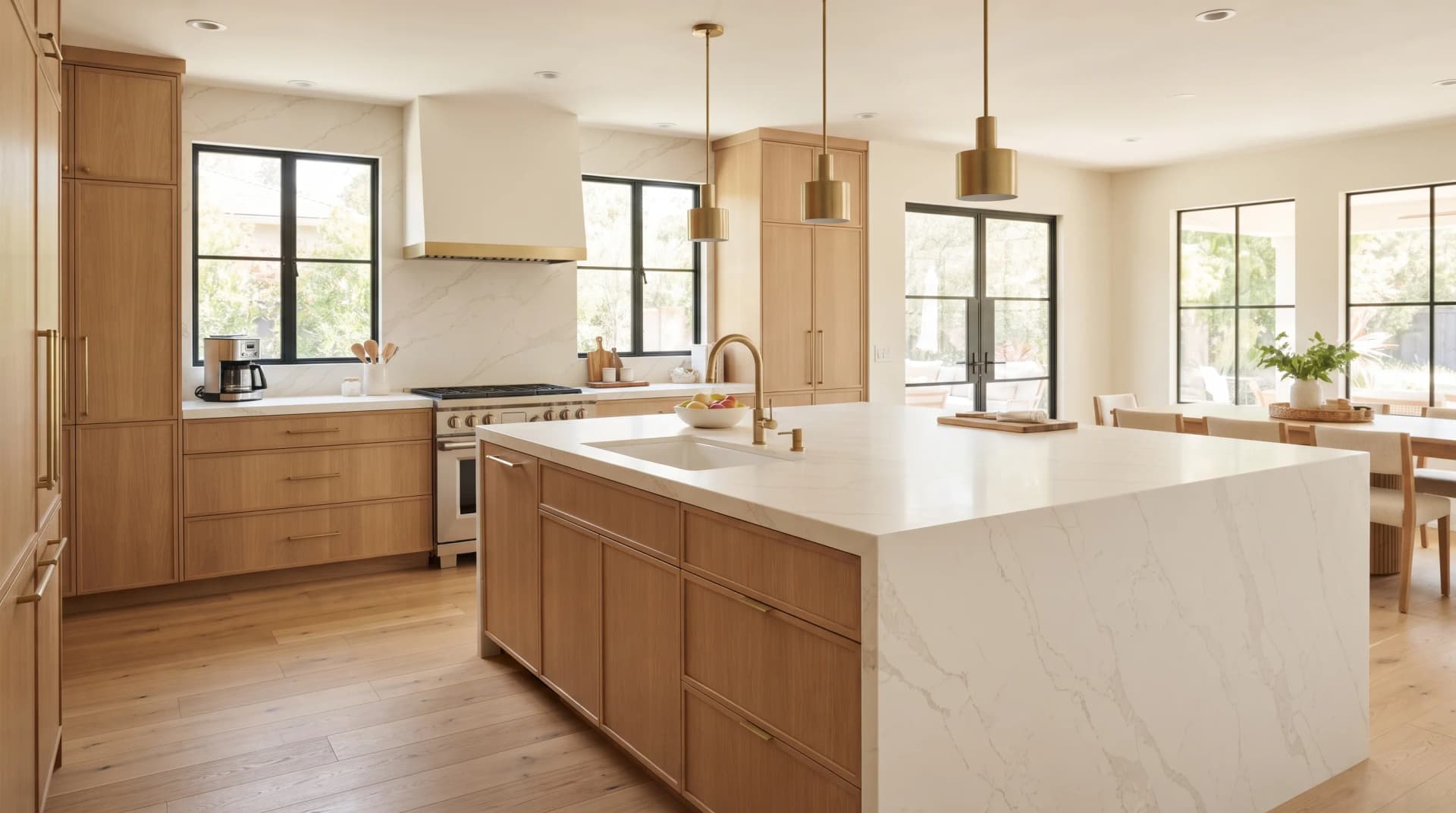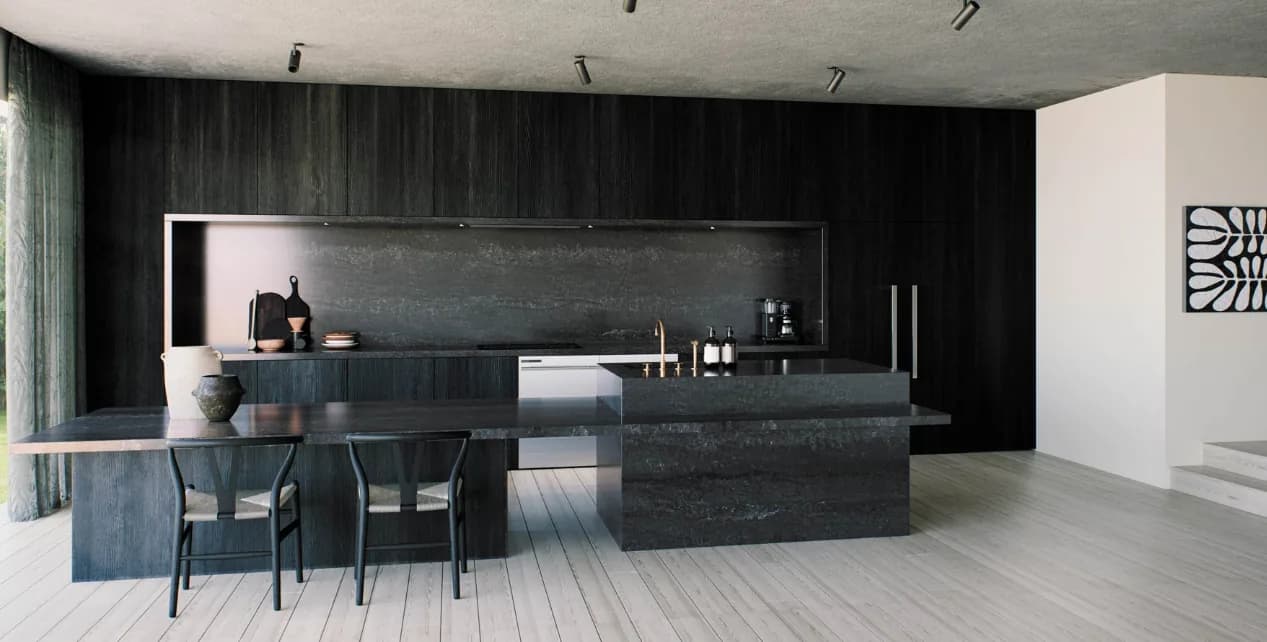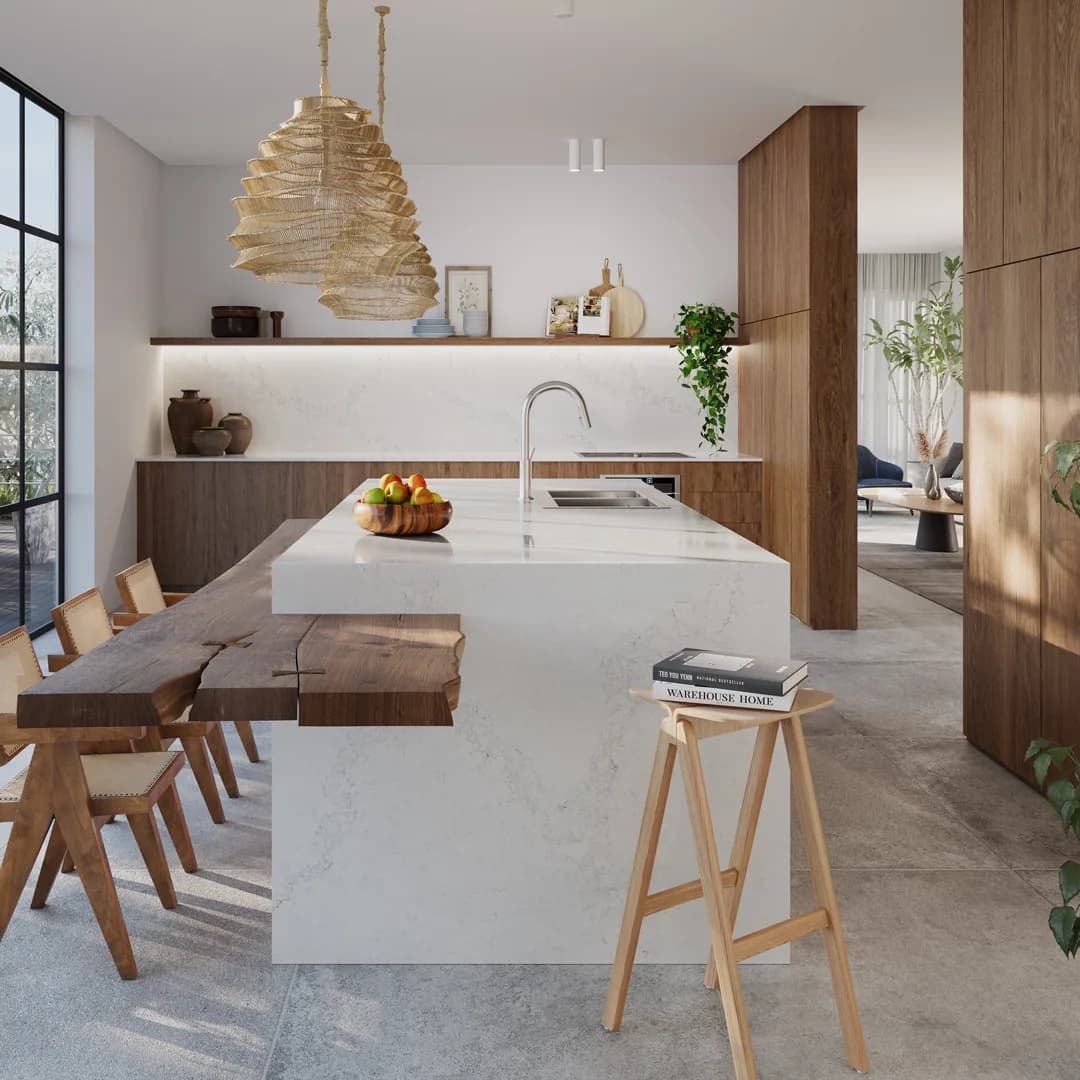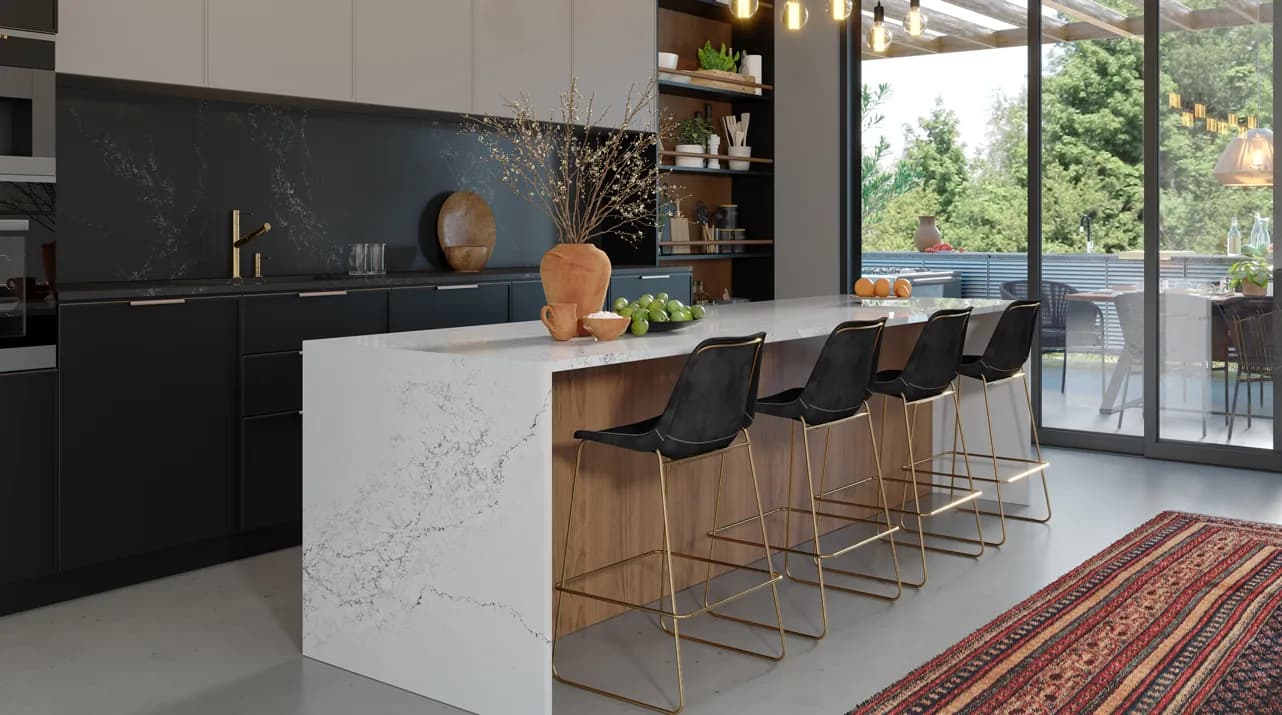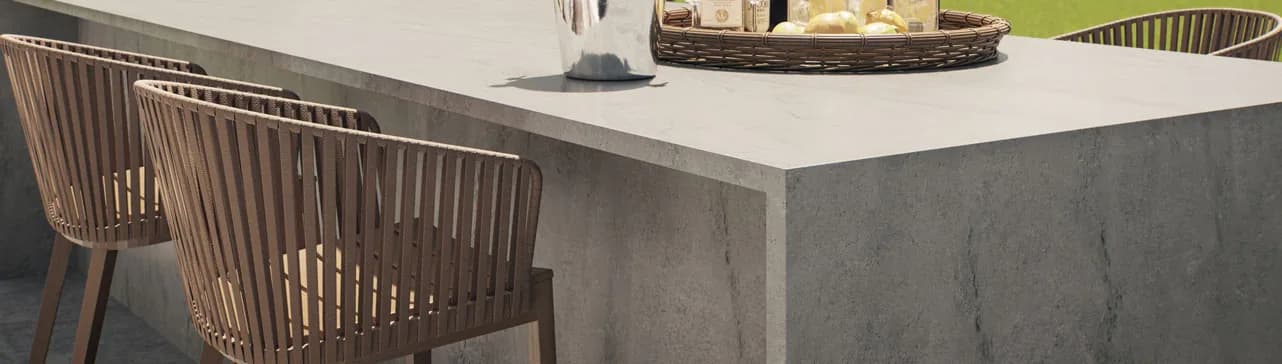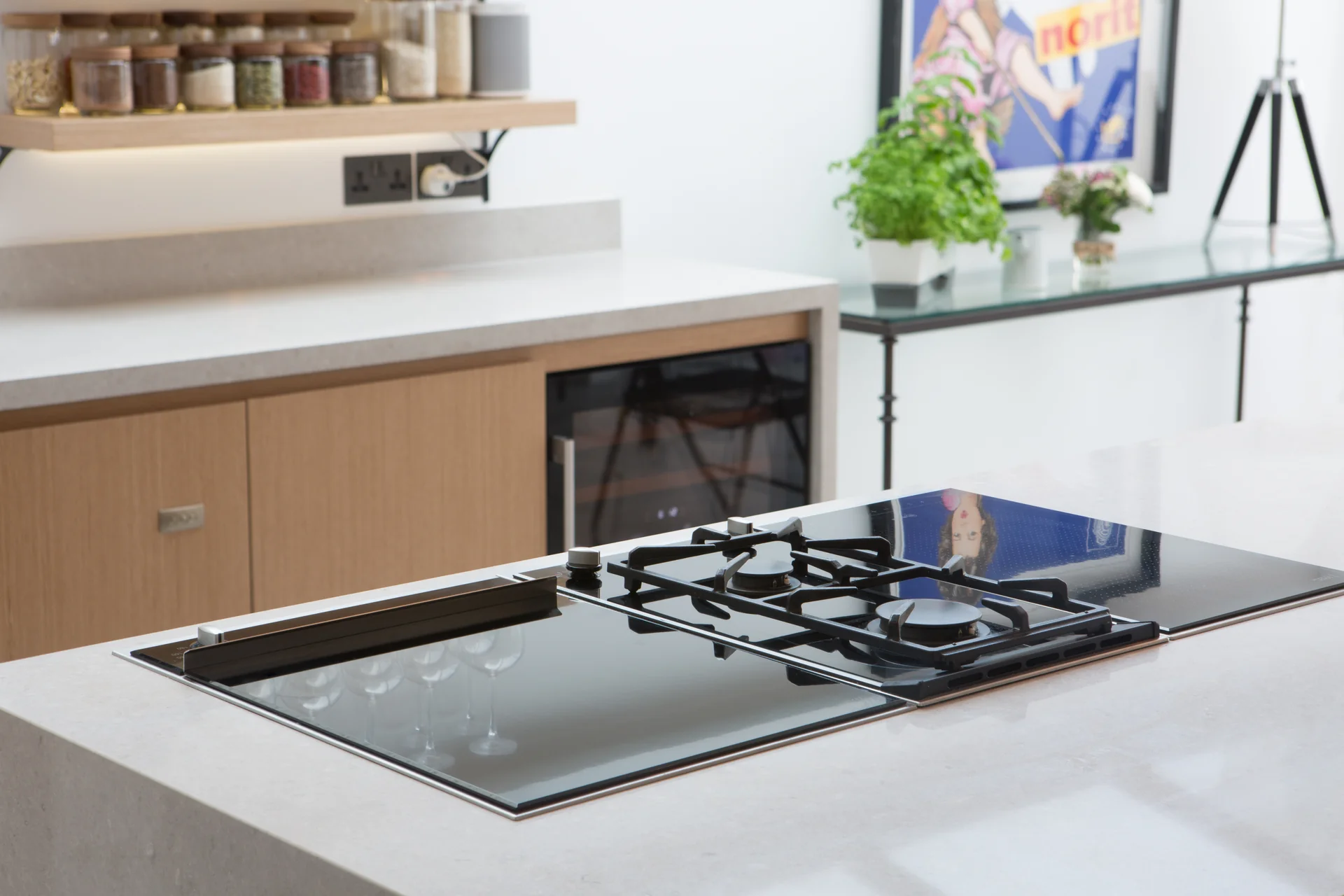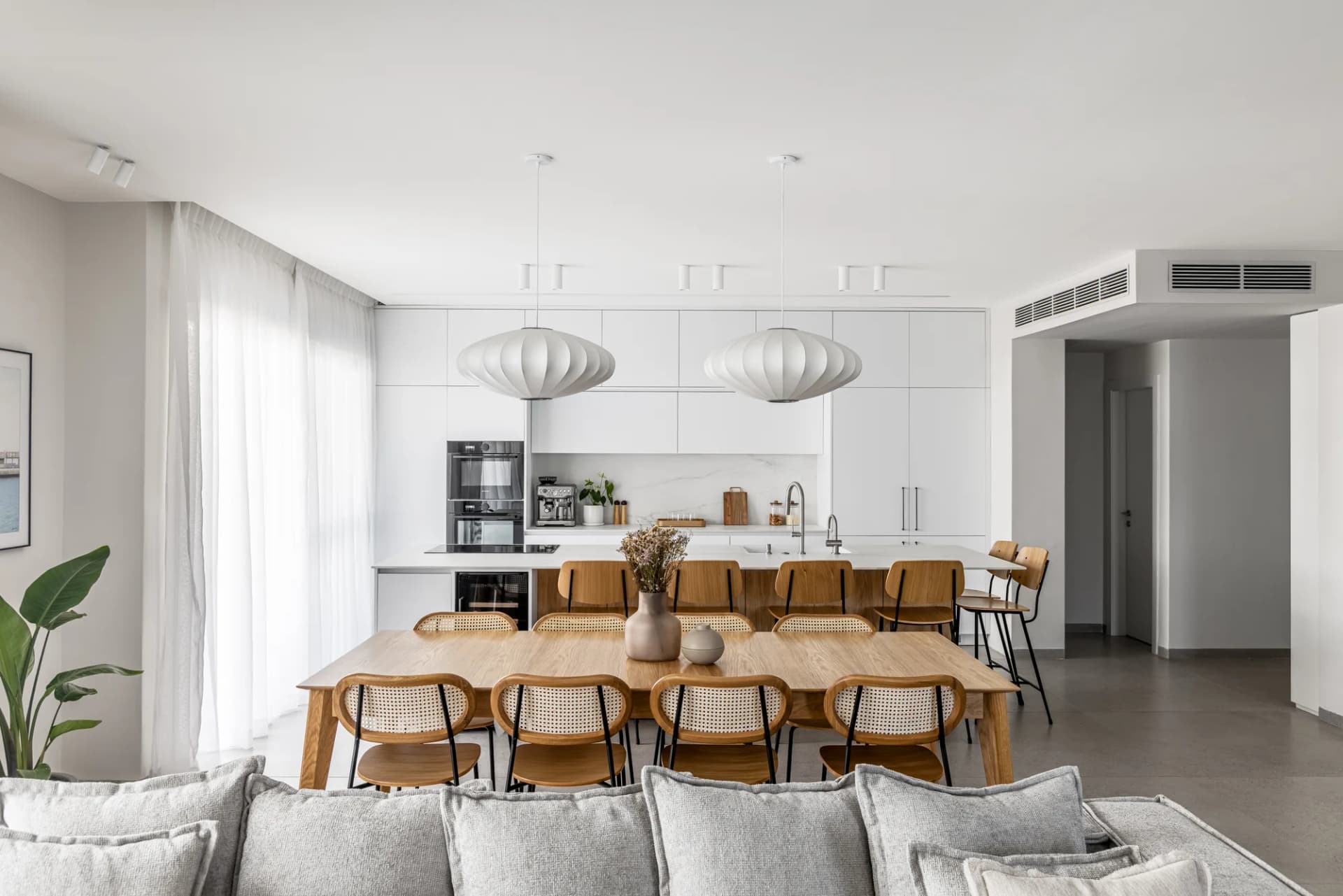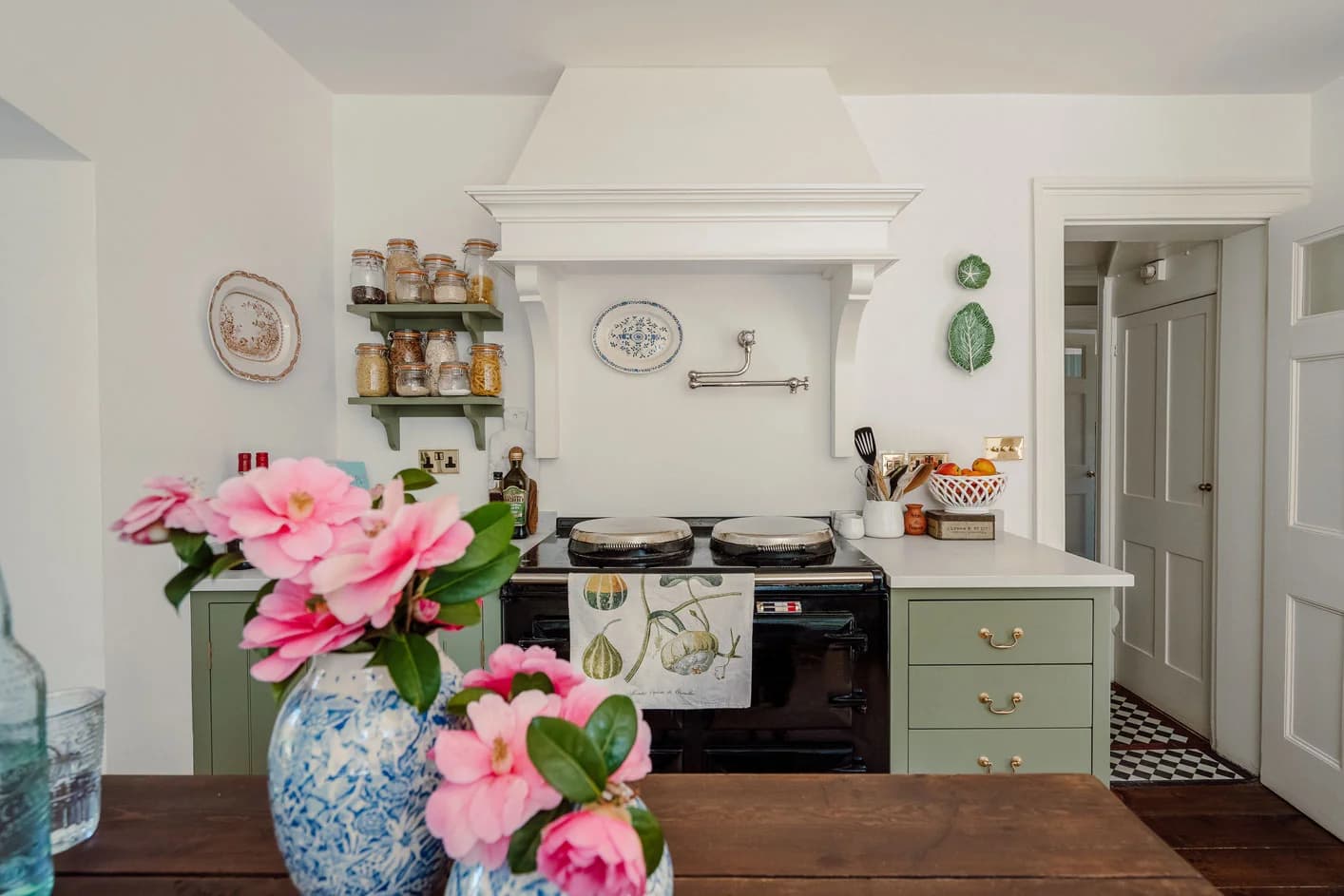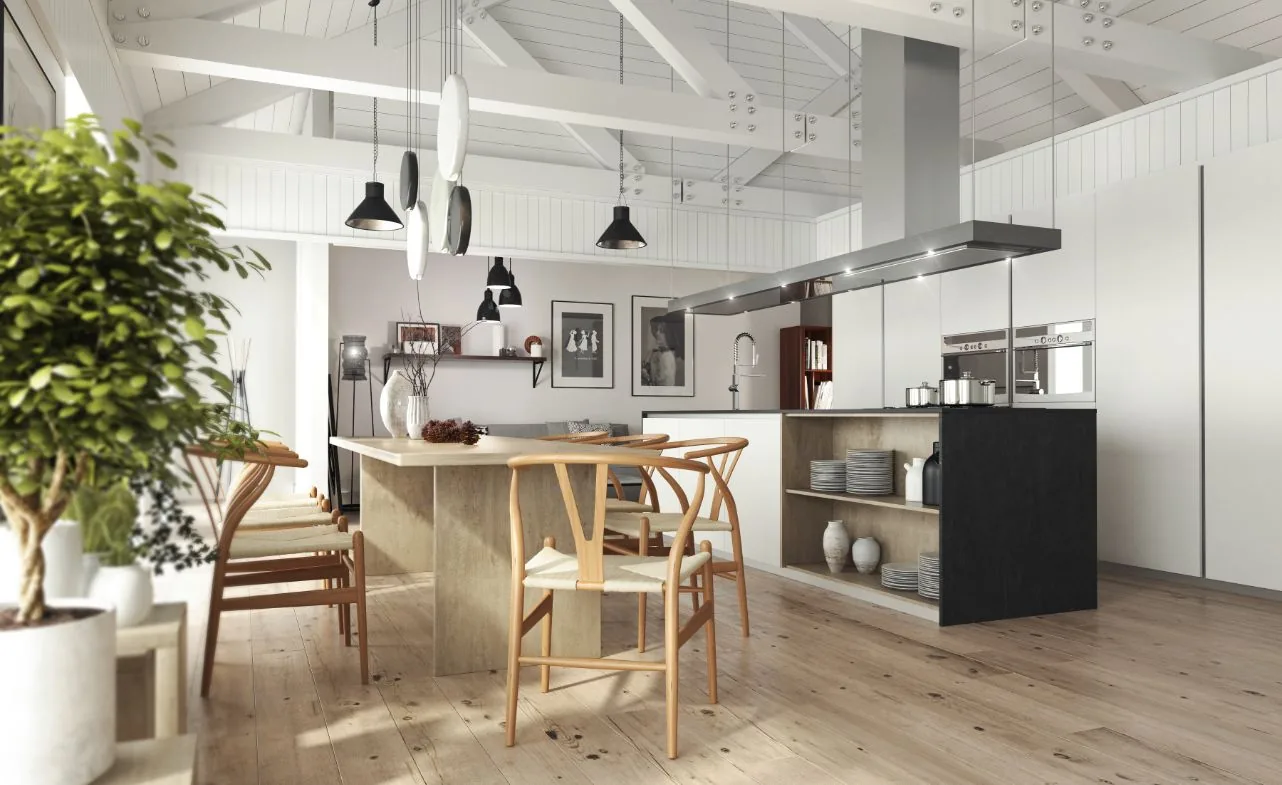
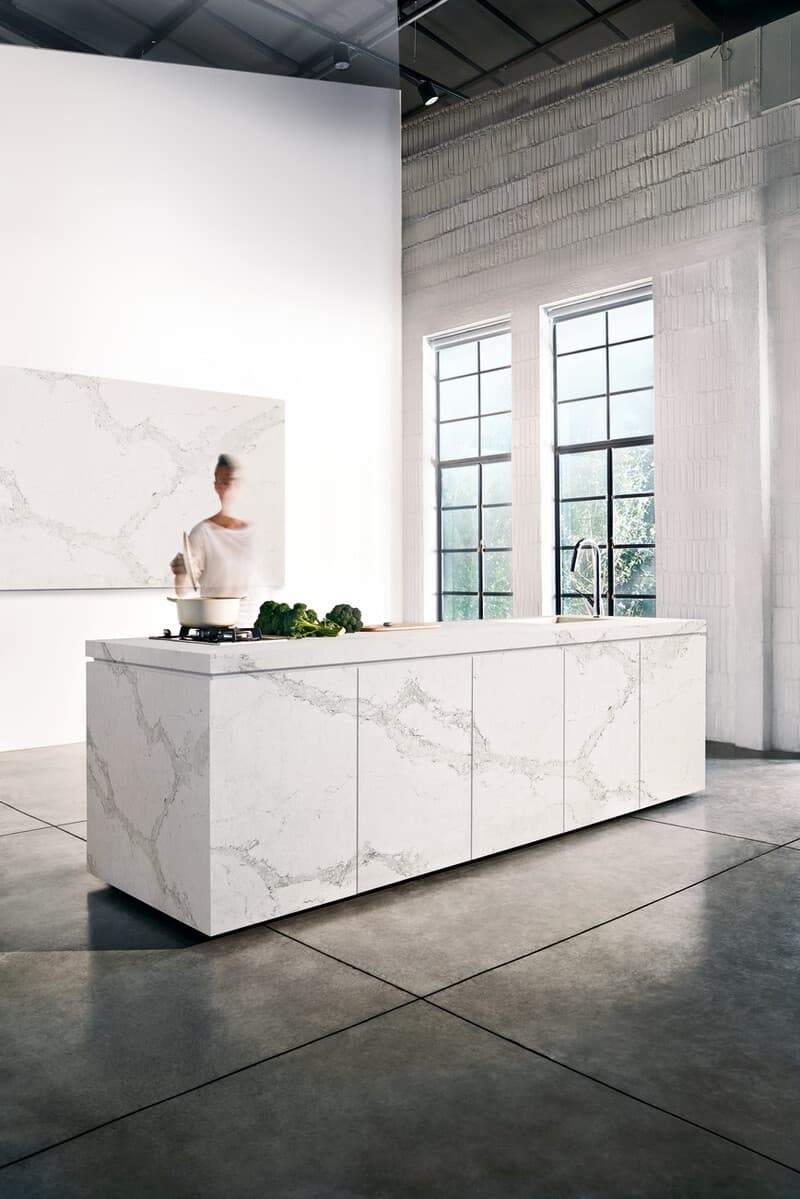
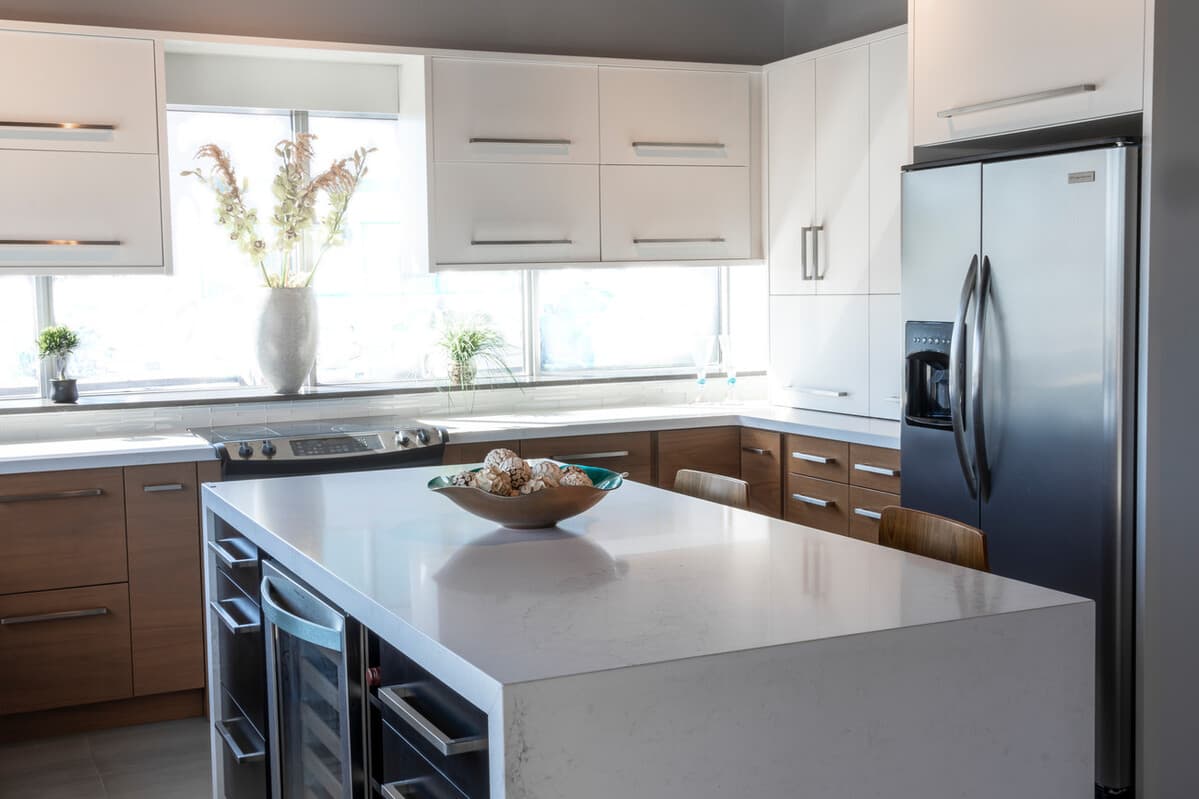
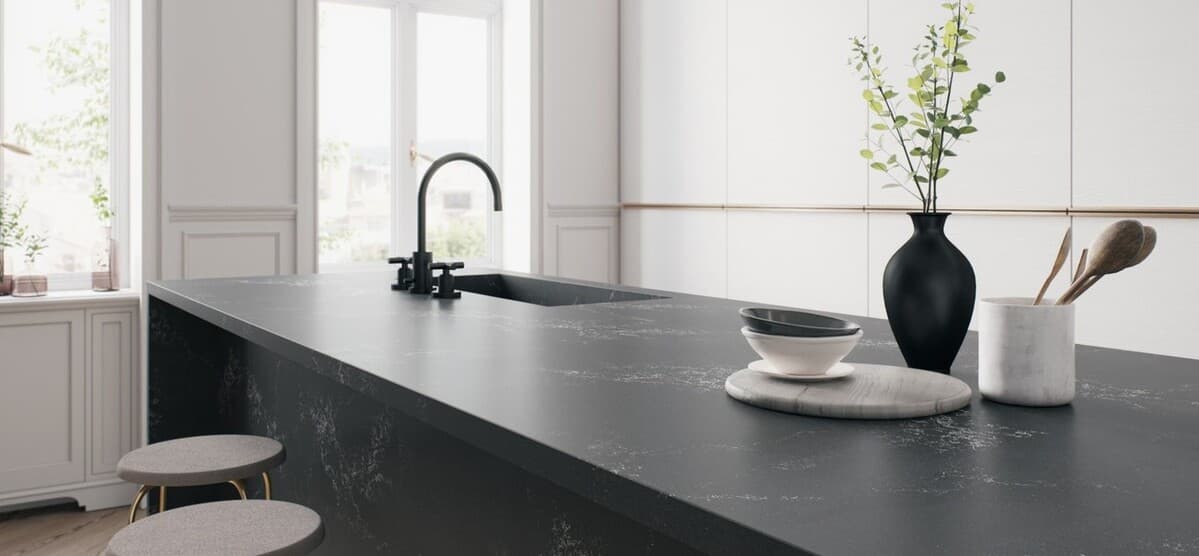
A kitchen island with a standard edge does its job. A kitchen island with a waterfall edge makes a statement. The countertop material flows continuously over the edge and down to the floor, creating a clean vertical plane that anchors the entire room.
Waterfall countertops have moved from high-end designer kitchens into mainstream Canadian renovations—and for good reason. They add architectural weight, hide the sides of an island, and create a surface that feels intentional and complete. But they also come with specific material, fabrication, and cost considerations that matter before you commit.
A waterfall countertop extends the surface material vertically down one or both sides of a kitchen island, creating a continuous flow from horizontal to vertical. This design works best with veined or patterned materials where the pattern can be matched across the mitre joint. Both quartz and porcelain support waterfall applications, but fabrication precision and material selection are critical to a seamless result.
- Waterfall edges wrap countertop material down the island sides to the floor
- Veined materials create the most dramatic effect when patterns are book-matched
- Mitre joints at 45 degrees require precision fabrication for invisible seams
- Both quartz and porcelain work well—material choice depends on pattern and budget
- Expect 30-50% more material cost compared to standard island edges
What Is a Waterfall Countertop?
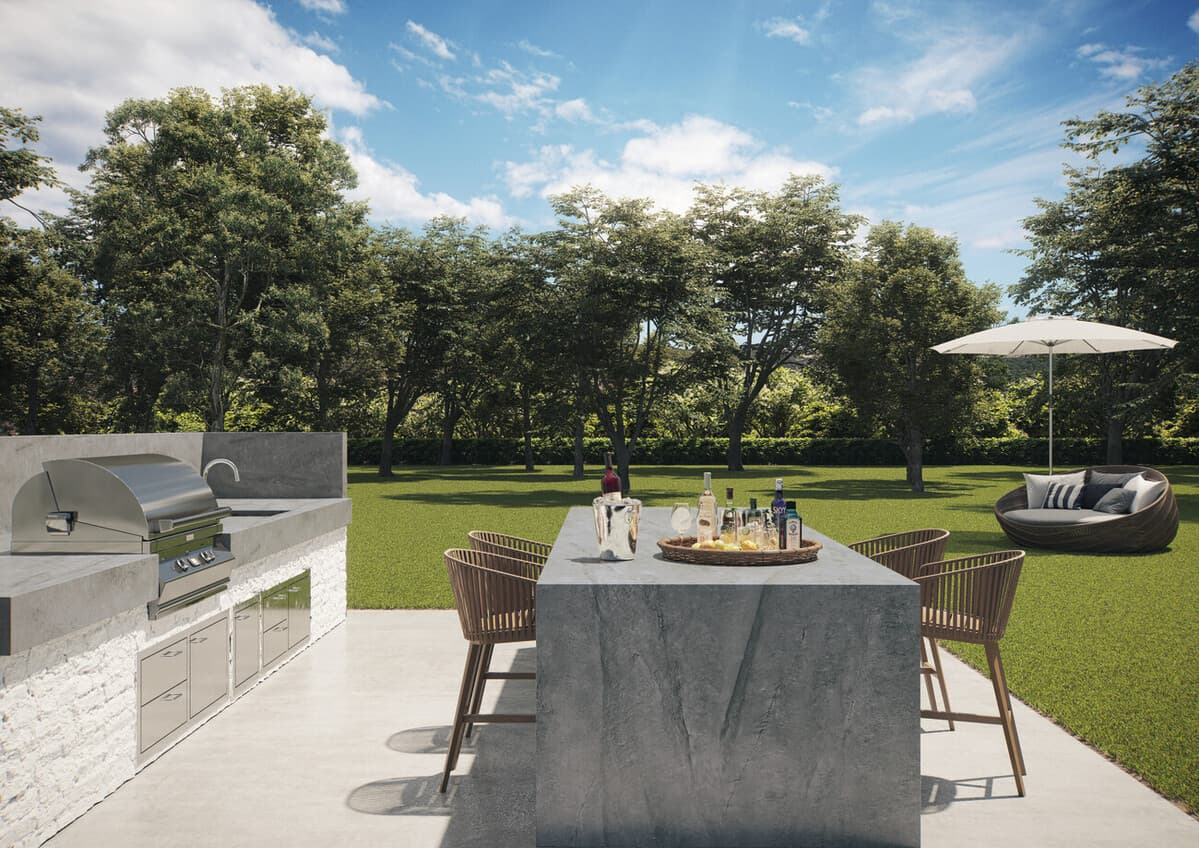
A waterfall countertop takes the horizontal surface of a kitchen island and continues it vertically down one or both ends to the floor. Instead of the countertop ending at the edge with exposed cabinetry below, the stone or engineered surface wraps around to create an unbroken visual line.
Single vs. Double Waterfall
- Single waterfall: Material flows down one end of the island. The opposite end typically has seating overhang or meets a wall. This is the most common configuration.
- Double waterfall: Material flows down both ends, creating a freestanding sculptural element. More dramatic but requires more material and eliminates seating overhang on both sides.
- Full wrap: Material continues across the front face as well, completely encasing the island. Rarely done in residential kitchens but striking in open-concept spaces.
The defining feature of any waterfall design is the mitre joint—a 45-degree cut where the horizontal surface meets the vertical panel. When done well, this joint is nearly invisible, and the material appears to bend seamlessly around the corner.
Why Waterfall Edges Work
Waterfall countertops aren't just aesthetic. They solve practical problems too.
Visual Impact
- Architectural anchor: The vertical surface adds visual mass, grounding the island in the room. In open-concept layouts, this defines the kitchen zone without walls.
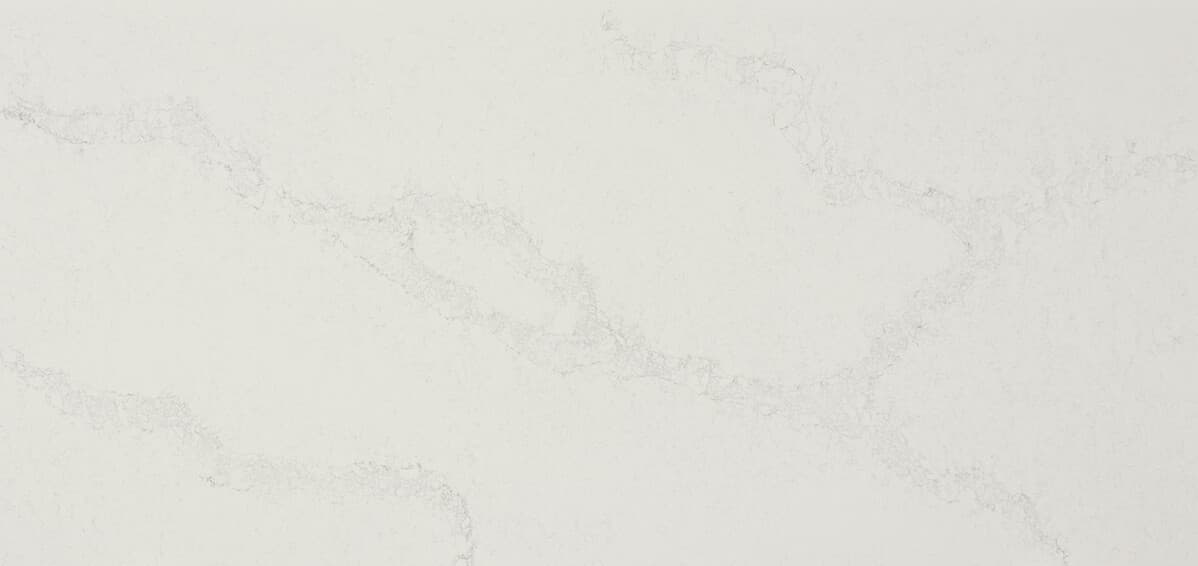
- Material showcase: Veined patterns get more surface area to display their character. A dramatic Calacatta vein running from countertop to floor is far more impactful than the same material stopping at a bullnose edge.
- Clean lines: The unbroken surface reads as modern and intentional, eliminating the visual interruption of exposed cabinet panels.
Practical Benefits
- Side protection: The stone panel protects island ends from kicks, scuffs, and chair damage—a real benefit in high-traffic kitchens.
- Hidden cabinetry: No need to finish or panel the exposed end of the island cabinet. The waterfall panel handles it.
- Spill containment: Liquids running off the countertop hit stone rather than wood or paint, making cleanup easier.
- Resale value: Waterfall islands are consistently listed as a desirable kitchen feature by Canadian real estate professionals.
Best Materials for Waterfall Countertops
Not all countertop materials are equally suited to waterfall applications. The key factors are pattern consistency, mitre joint quality, and structural behaviour.
Quartz
Engineered quartz is the most popular choice for waterfall countertops in Canada, and for good reason.
- Pattern consistency: Manufactured patterns are more predictable than natural stone, making vein matching across the mitre joint more reliable.
- Fabrication precision: Quartz cuts cleanly and polishes to a consistent finish, producing tight mitre joints.
- Weight: Standard 2cm or 3cm quartz slabs are heavy but within normal island framing tolerances.
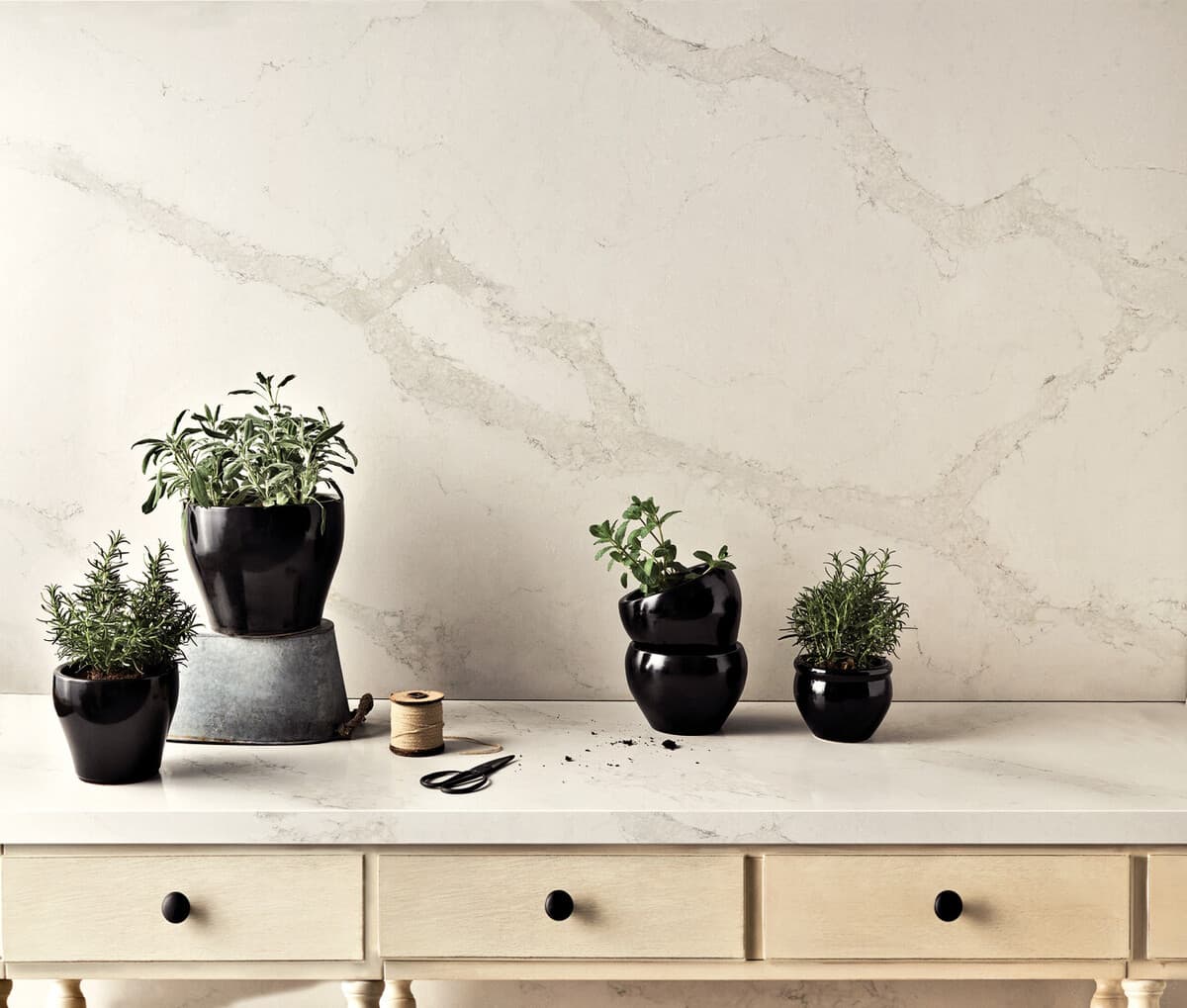
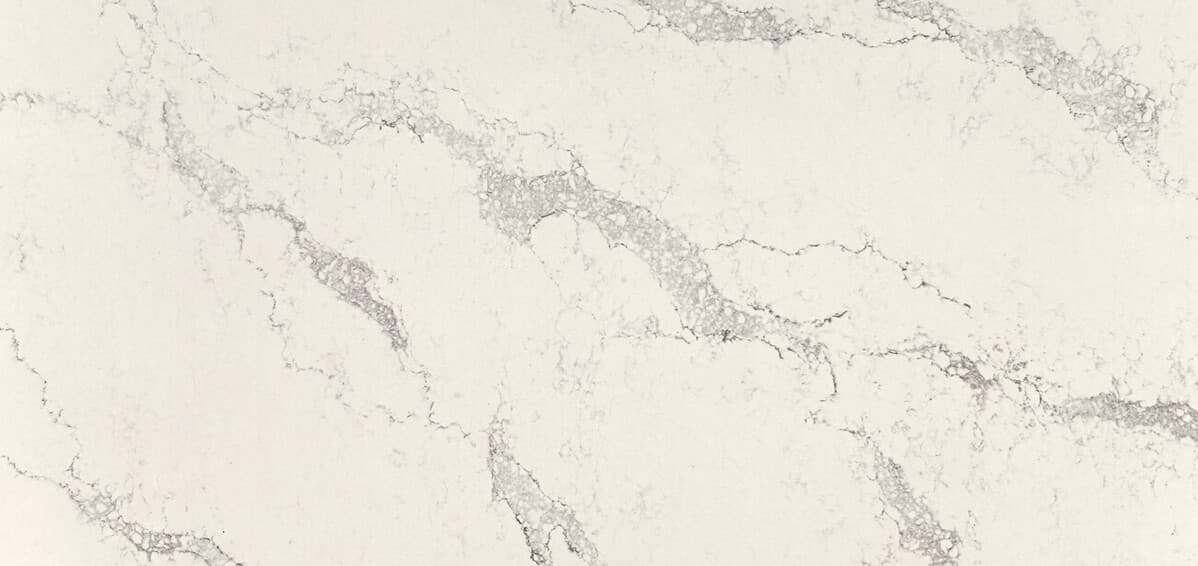
- Best patterns for waterfall: Dramatic veining like Calacatta Nuvo, Statuario Maximus, or Empira Black creates the most impact. Bold veins that flow across the joint draw the eye along the material.
Porcelain
Large-format porcelain slabs are increasingly used for waterfall applications, especially in contemporary designs.
- Thin profiles: Porcelain at 6mm or 12mm creates a sleek, minimal waterfall edge. The thinner profile reads as lighter and more refined than thick stone.
- Full-body colour: Full-body porcelain means the edge colour matches the surface—critical for visible mitre joints.
- Large slab sizes: Porcelain slabs come in sizes up to 320cm x 160cm, often covering a full island side in a single piece.
- Weight advantage: A 12mm porcelain waterfall panel weighs significantly less than a 3cm quartz panel, reducing structural requirements.
| Factor | Quartz | Porcelain |
|---|---|---|
| Typical thickness | 2cm or 3cm | 6mm, 12mm, or 20mm |
| Vein matching | Excellent — manufactured consistency | Very good — digital printing allows repeats |
| Mitre joint visibility | Nearly invisible with skilled fabrication | Nearly invisible — thinner edge helps |
| Weight per panel | Heavy (3cm slab ~50-60 kg per side) | Light to moderate (12mm ~25-30 kg per side) |
| Best visual effect | Bold veining, marble looks | Contemporary, minimal, ultra-thin edge |
| Heat at vertical edge | Keep hot items away from joint | Naturally heat-resistant |
Vein Matching & Mitre Joints
The mitre joint is what makes or breaks a waterfall countertop. This is where the horizontal surface meets the vertical panel at a 45-degree angle. When done correctly, the veining flows continuously around the corner. When done poorly, it looks like two separate pieces of stone stuck together.
How Vein Matching Works
Fabricators achieve vein continuity through a technique called book-matching at the mitre:
- Slab layout planning: The fabricator maps the veining pattern across the full slab and plans where the mitre cut will fall.
- 45-degree cuts: Both the horizontal and vertical pieces are cut at precise 45-degree angles from the same area of the slab.
- Pattern alignment: When the two pieces are joined, the veining should flow continuously from top surface to vertical panel.
- Adhesive and finishing: Colour-matched adhesive fills the joint, and the seam is polished to match the surrounding surface.
The critical detail: Vein matching requires careful slab selection and layout. This is why viewing full slabs before fabrication matters even more for waterfall projects. You need to see exactly where the veins fall and approve the cut plan.
What Affects Joint Quality
- Fabricator skill: Mitre joints demand CNC precision and experienced hands. This is not a job for budget fabricators.
- Material uniformity: Materials with consistent backgrounds (quartz, porcelain) hide joints better than materials with high natural variation.
- Edge thickness: Thinner edges (porcelain 6-12mm) create less visible joints. Thicker materials (quartz 3cm) expose more of the joint surface.
- Pattern direction: Diagonal veins that cross the joint are harder to match than horizontal or vertical veins. Discuss pattern orientation with your fabricator.
“We chose Calacatta Nuvo specifically for the waterfall edge on our island. Our fabricator spent two hours with us at the stone yard planning exactly where to cut the slab so the veining would flow around the corner. The result looks like one continuous piece of stone—guests always touch the corner thinking it's impossible.”
Design Considerations
A waterfall countertop affects more than just the island. Consider how it interacts with the rest of your kitchen design.
Pattern Selection
- Bold veining: Large-scale veined patterns create the most dramatic waterfall effect. The veining becomes a design feature that draws the eye from countertop to floor.
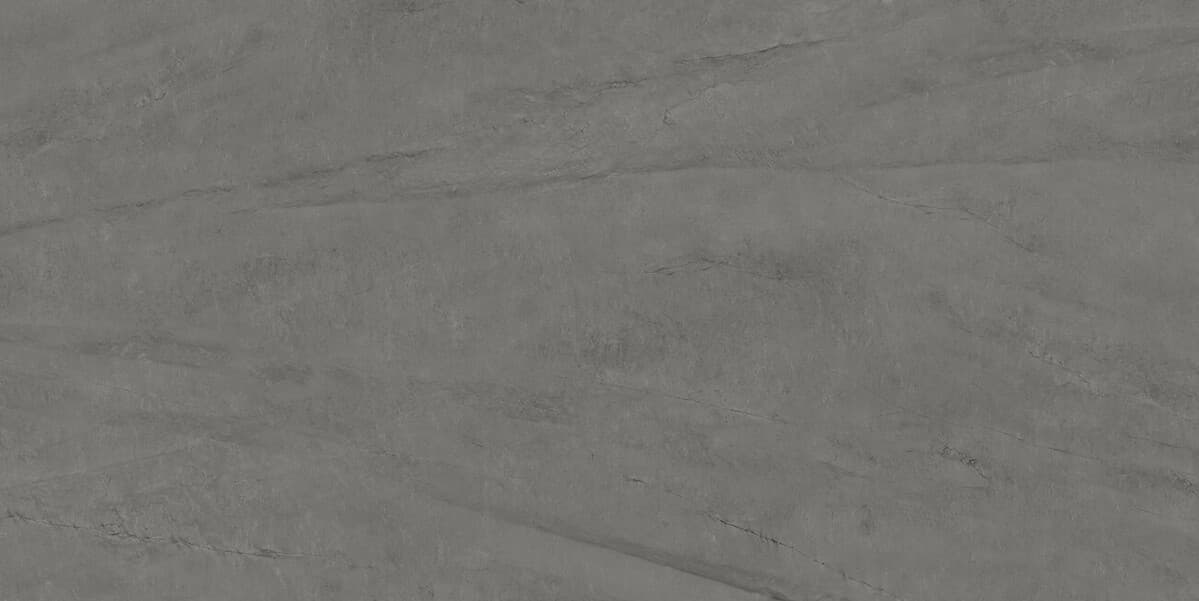
- Subtle patterns: Fine-grained or speckled materials create a quieter waterfall. The architectural shape does the work rather than the pattern.
- Solid colours: A solid colour waterfall emphasizes pure form. The mitre joint is also easier to hide in uniform materials.
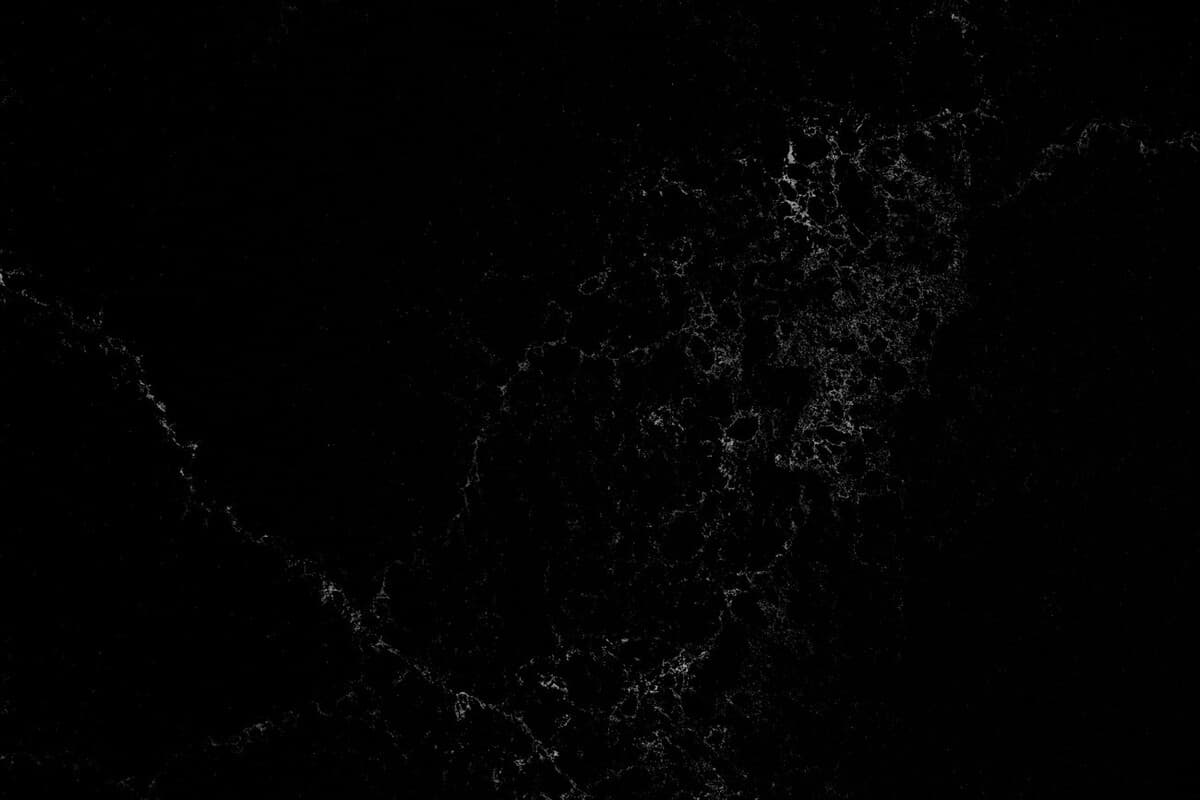
- Dark materials: Black or charcoal waterfalls create a grounding anchor effect. Empira Black or Darcrest flowing to the floor adds serious visual weight.
Island Proportions
- Height: Standard counter height (36 inches) works well. Bar height (42 inches) creates a taller vertical panel that adds more drama.
- Length: Waterfall edges look best on islands at least 6 feet long. On shorter islands, the vertical panel can feel disproportionate.
- Depth: Standard 25-inch depth is fine. Deeper islands (30-36 inches) give the horizontal surface more presence to balance the vertical drop.
- Seating integration: Single waterfall allows bar seating on the opposite end with an overhang. Plan the overhang side before fabrication—it can't be changed after.
Complementary Elements
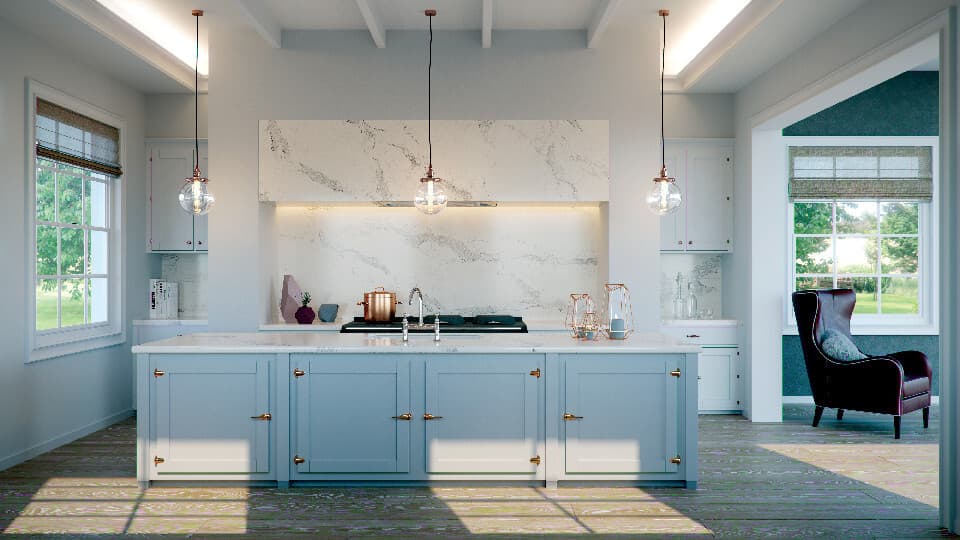
- Cabinet colour: Waterfall islands pair well with both matching and contrasting cabinets. White waterfall on dark cabinets creates contrast. Matching tones create cohesion.
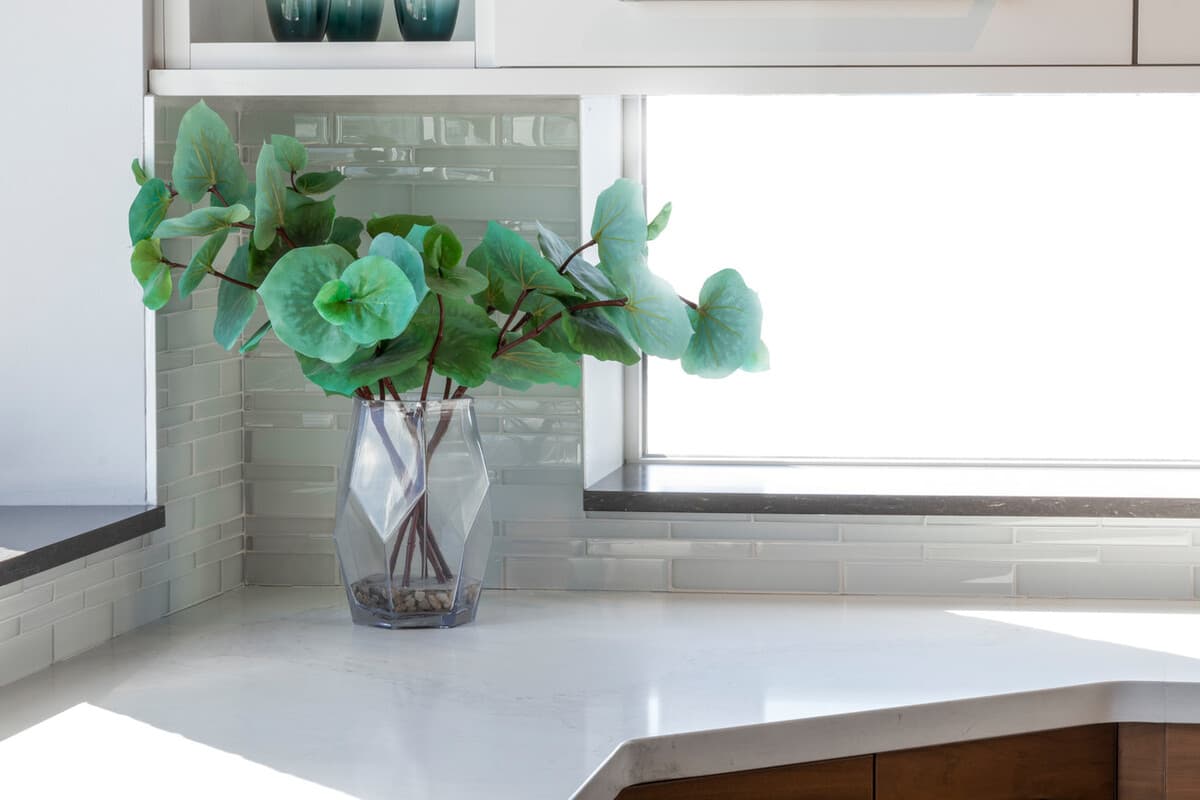
- Backsplash: Keep the backsplash simpler if the waterfall island is the star. Two competing pattern features can overwhelm a kitchen.
- Flooring transition: The waterfall panel meets the floor—ensure the flooring colour and material complement the stone. A slight reveal (1-2mm gap) at the base is standard for installation tolerance.
- Lighting: Under-cabinet and pendant lighting above the island highlight the waterfall edge. Recessed toe-kick lighting can wash the base of the waterfall panel for added effect.
Planning a waterfall island?
Our team can help you select the right material and connect you with fabricators experienced in precision mitre joints. The material choice and fabrication quality make all the difference.
Get Expert AdviceCost & Installation Realities
Waterfall countertops cost more than standard edges. Understanding where the extra cost comes from helps you budget accurately.
Additional Material Cost
- More material required: Each waterfall panel uses roughly 3-4 square feet of additional material (for standard 36-inch counter height). A double waterfall doubles that.
- Slab efficiency: Vein matching often requires the vertical panel to be cut from a specific area of the slab, which can reduce usable material from that slab.
- Typical material premium: Expect 30-50% more material cost compared to the same island without waterfall edges.
Fabrication Cost
- Mitre cutting: Precision 45-degree cuts require CNC equipment and skilled operators. This adds fabrication time and cost.
- Vein matching labour: Layout planning, pattern alignment, and test fitting are time-intensive steps unique to waterfall projects.
- Installation complexity: Waterfall panels need structural support, careful levelling, and precise adhesive application. Installation takes longer than standard countertops.
Structural Requirements
- Island framing: The island cabinet needs a solid end panel or backing to support the waterfall slab. Your cabinet maker should plan for this.
- Support brackets: Heavy materials (3cm quartz) may need steel L-brackets or a cleat system to hold the vertical panel securely.
- Floor levelling: The vertical panel must sit plumb. Uneven floors create visible gaps at the base.
Waterfall vs. Standard Island Edges
A waterfall isn't always the right choice. Here's how to decide.
| Consideration | Waterfall Edge | Standard Edge |
|---|---|---|
| Visual impact | High — architectural statement | Neutral — blends with cabinetry |
| Material cost | 30-50% more material | Standard material quantity |
| Fabrication complexity | Requires precision mitre joints | Standard edge profiling |
| Side protection | Full stone protection on ends | Exposed cabinetry or panel |
| Seating flexibility | Limited to non-waterfall end | Overhang possible on any side |
| Best for | Statement islands, open layouts, veined materials | Budget projects, seating-focused islands |
| Design style | Contemporary, transitional, luxury | Any style |
When Waterfall Makes Sense
- You've chosen a material with dramatic veining you want to showcase
- The island is visible from multiple angles in an open-concept space
- You want to hide the island end panel and simplify cabinetry
- The kitchen design has a contemporary or transitional style
- Budget allows for the additional material and fabrication cost
When Standard Edges Make Sense
- Budget is a primary concern
- You need seating overhang on multiple sides
- The island sits against a wall on one end
- You've chosen a solid-colour material where the waterfall effect adds less impact
- The kitchen style is traditional or rustic, where waterfall edges may feel out of place
“We originally planned a double waterfall but our designer suggested single waterfall with seating overhang on the other end. Best advice we got. We still have the dramatic stone feature, plus our kids sit there for breakfast every morning. Practical and beautiful.”
Frequently Asked Questions
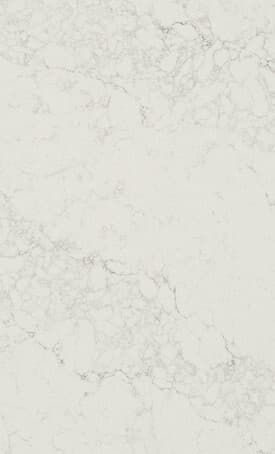
Browse veined and dramatic patterns perfect for waterfall countertop islands
Your Next Steps
A waterfall countertop is one of the most impactful design decisions in a kitchen renovation. The material choice, fabrication quality, and design planning all need to align for a result that looks effortless.
Planning your waterfall island:
- Choose a material with a pattern worth showcasing at full scale
- View full slabs and discuss vein orientation with your fabricator
- Confirm island dimensions and seating layout before fabrication
- Ensure your cabinet maker plans structural support for the vertical panel
- Budget for the additional material and precision fabrication costs
Continue exploring:
- Countertop Edge Profiles — Compare all edge options including waterfall
- Viewing Countertop Samples — How to evaluate slabs for waterfall projects
- Polished vs. Matte vs. Honed — Choose the right finish for your waterfall
Your Next Steps
We fabricate and install what this article describes — see kitchen and bath surfaces in Vaughan.